-
What Is a Prediction Market?
Picture you and a friend arguing about whether a team wins the championship. One says yes and puts down $100. The other says no and matches it. Winner takes all. A prediction market is that same bet, scaled up to thousands of strangers instead of one friend, and opened up to almost any question you…
-
Prediction Markets vs. Betting: What’s the Difference?
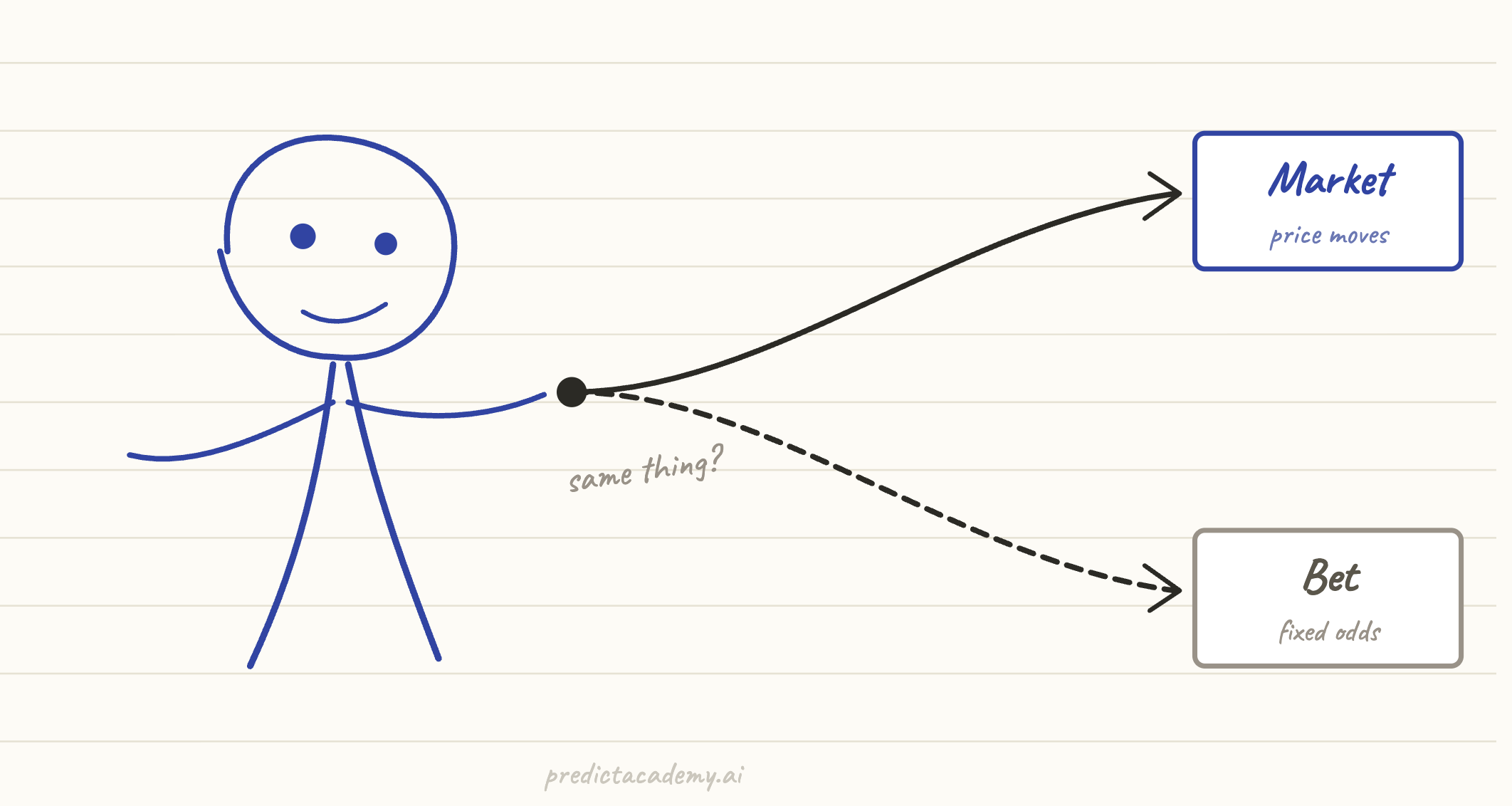
It’s a fair guess. Both put money on an uncertain outcome, and both pay out if you’re right. From a distance, prediction markets versus betting looks like a distinction without a difference, two cousins wearing different jackets. Look under the hood, though, and the mechanics run close to opposite. Once you notice it, you can’t…
-
How to Read Prediction Market Prices
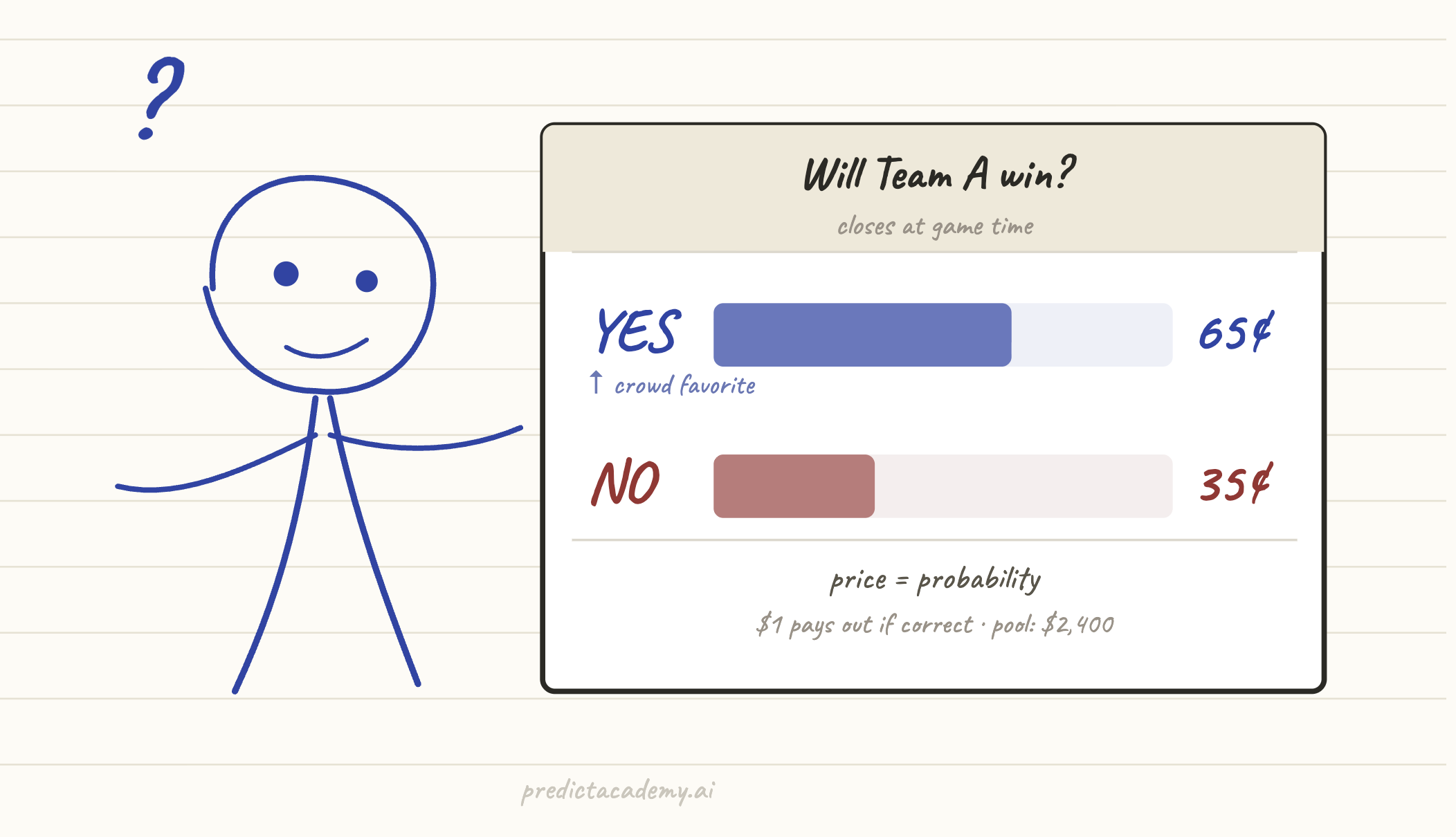
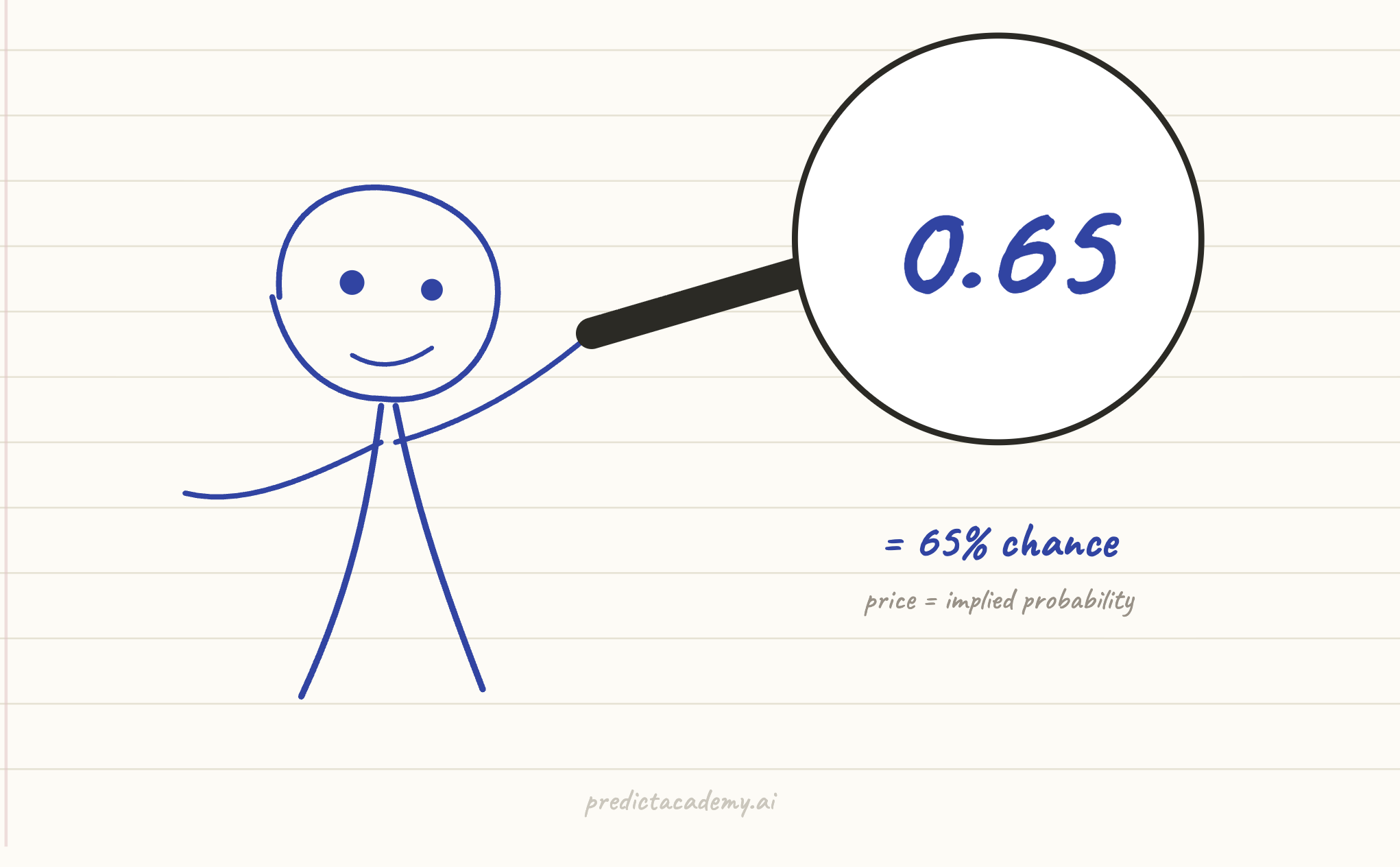
A prediction market shows you a single number, say $0.65. Almost everything you need is packed into it if you know how to unpack it. Most people don’t, and it quietly costs them money. By the end of this, you’ll read that screen better than a lot of the people trading on it. The basics:…
-
Where the Costs Hide: Fees, Spreads, and Slippage
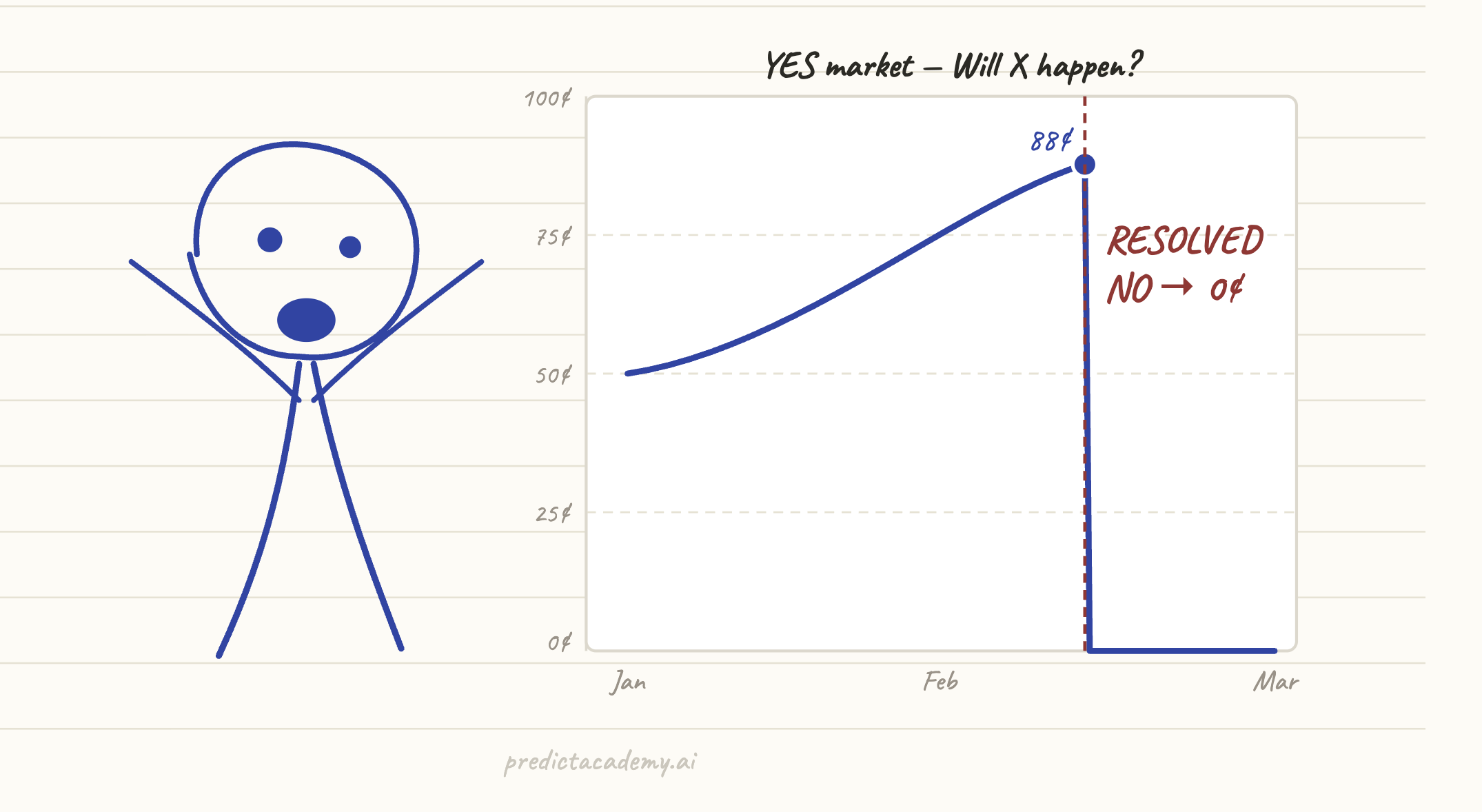
Here’s a puzzle that catches almost everyone. You buy a share at 30¢. Later you sell it, and the price on screen still reads 30¢. You’d expect to break even. Instead you’re down. Nothing moved, and you still lost money. That gap is the whole subject of this note: prediction market fees, and the two…

-
Getting Started Safely: A First-Month Guide to Prediction Markets
The final part of Foundations. If you’re new, start from the beginning: What Is a Prediction Market? → Prediction Markets vs Betting → How to Read Prediction Market Prices → Where the Costs Hide → this. You understand what prediction markets are. You know how to read a price. Here’s where most beginners lose money:…

-
Judge the Floor, Not the Peak: What Prediction Market Volume Really Tells You
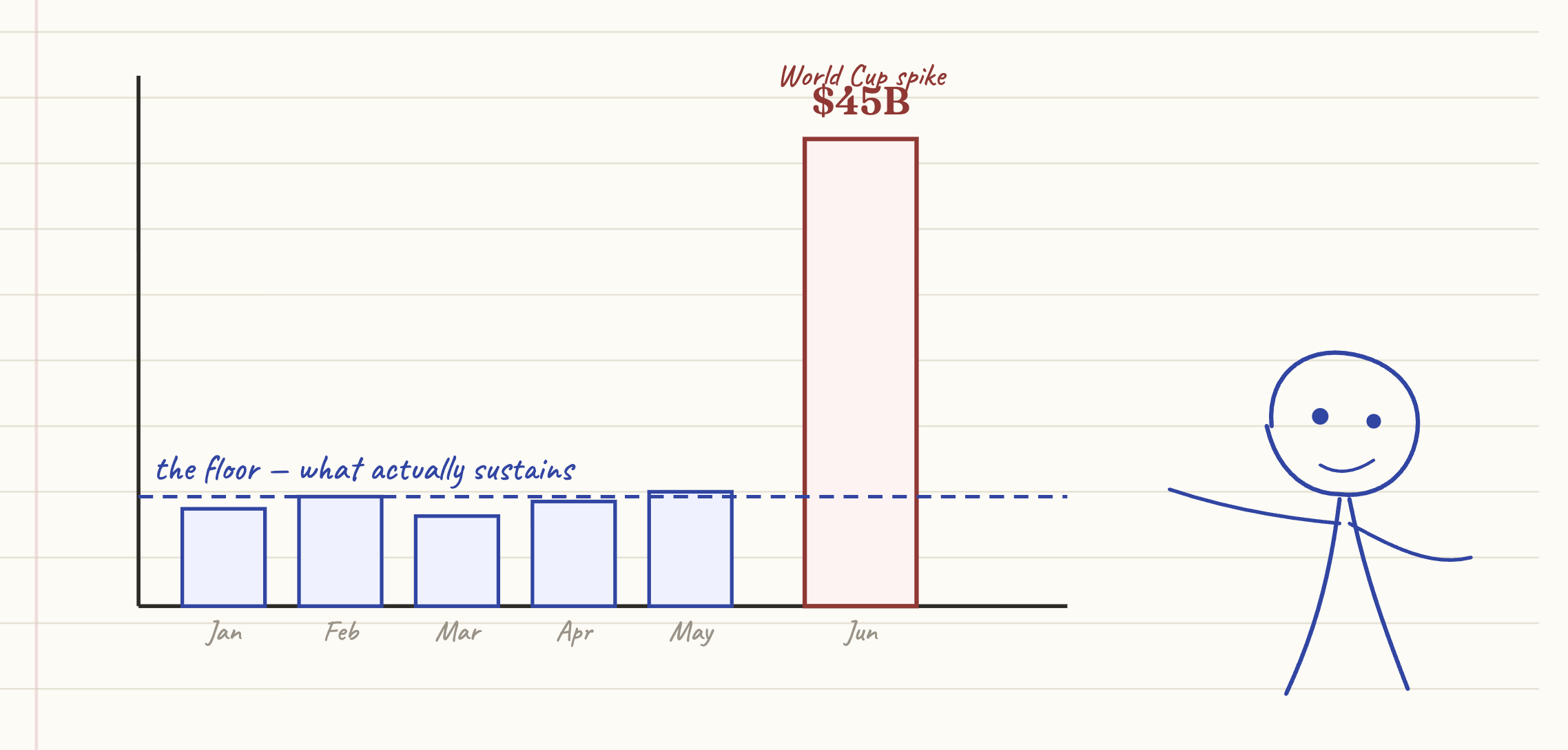
Every few weeks a headline says prediction markets just hit a record. The last one was big. Combined monthly volume across the major platforms reached roughly $45 billion in June 2026, and a few outlets pushed the World Cup number past $50 billion depending on how they counted. The rest of the story tells itself:…
-
Can You Actually Make Money on Prediction Markets?
Yes, but about 84% of people don’t. That number comes from an on-chain study of 2.5 million Polymarket wallets published in April 2026. Not a survey, not a guess: every address that ever traded, read off the blockchain. Most of them are down. Search for this and you’ll get a page of articles titled “10…

-
Who Are You Really Betting Against?
Every time you buy Yes, someone sells it to you. The price you click is another person’s opposite opinion, wearing a number. So the question that decides whether you make money isn’t “am I right about the event?” It’s “why is the one on the other side of this trade wrong?” Most beginners never ask…

-
How Much to Bet: Why Being Right Isn’t Enough
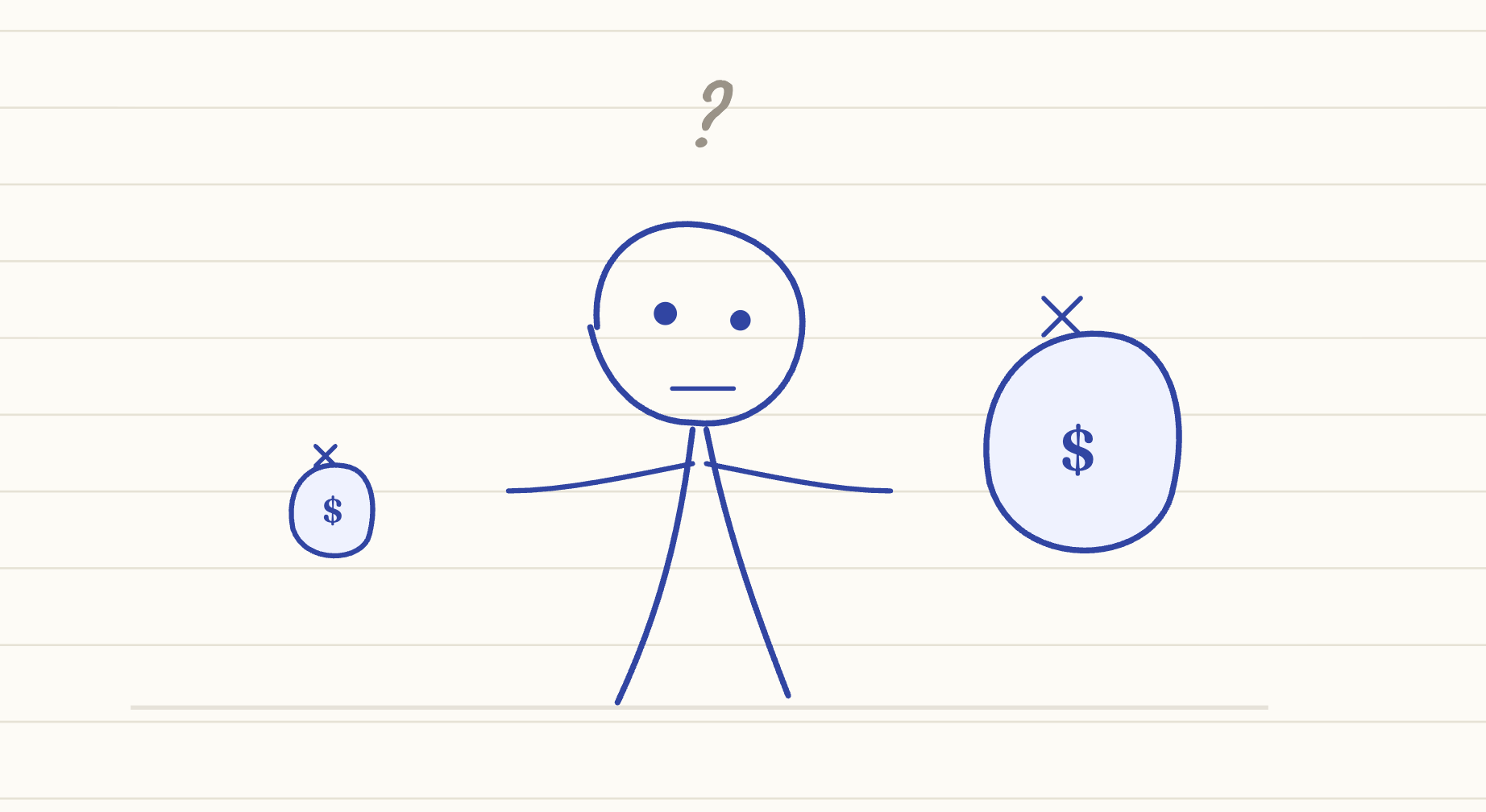
Most people who lose money on prediction markets were not wrong about the world. They were wrong about size. That’s the part nobody covers, because it doesn’t sell. Reading prices is interesting. Spotting a mispriced market feels clever. Deciding how much to put on it feels like admin. But the size of your position decides…
-
Where the Odds Come From: Liquidity and Market Makers
Every price on your screen was put there by someone who expects to get paid for putting it there. That sounds cynical. It’s just how the plumbing works, and knowing whose money is standing behind a number tells you more about whether to trust it than the number itself does. Two mechanisms, one job An…

-
Limit Orders and the Order Book: How to Stop Paying the Spread
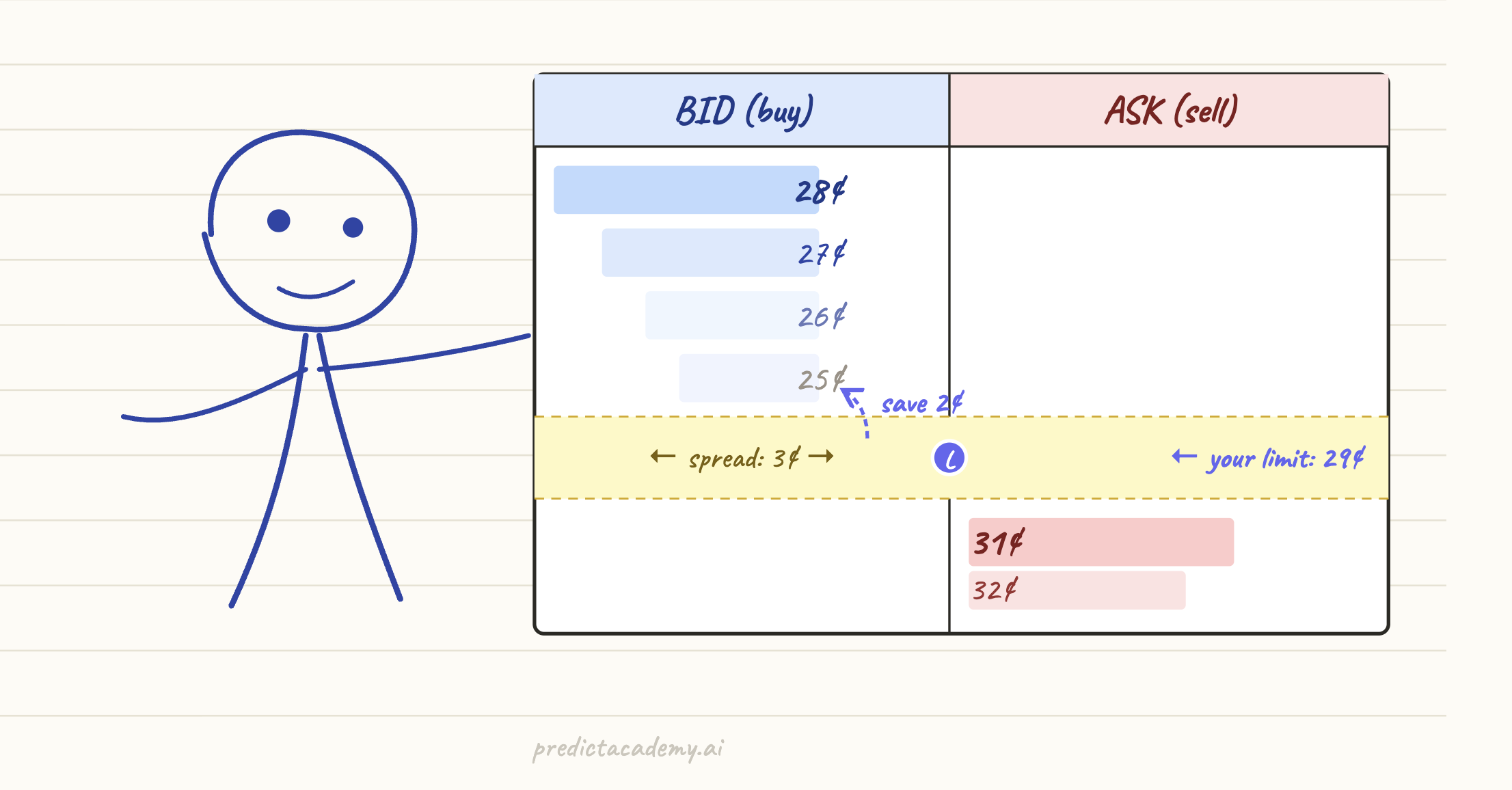
In the last note, I promised an escape hatch. Crossing the spread — buying at the ask, selling at the bid — is a cost most beginners pay without noticing. There’s a way to sidestep a lot of it, and it comes down to understanding one screen most people scroll past: the order book. This…
-
Prediction Market Resolution: The Risk Nobody Prices In
In June 2026, Polymarket ran a market on a question that sounded simple: would MicroStrategy, the company that’s spent years hoarding Bitcoin, sell any of it before May 31? The company’s own SEC filing said yes. It sold 32 BTC between May 26 and May 31, squarely inside the window. It was documented and public,…